Showing posts with label eu. Show all posts

August 28, 2008

Music Media - are physical formats dying?

I guess that there are plenty of ways I could use to talk about this, and a lot of things I could say about it. So, since this comes as a reflection of two things that happened during my vacations, I'll just tell you about those two, talk only a little about my reflections about it... and let you do your own thinking.
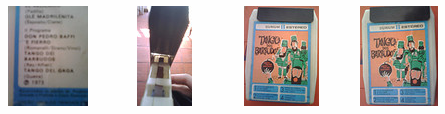
8-track-small


The first one is about Stereo 8. What's in the picture is - for those that don't know - a Stereo 8 cartridge. Before the massification of the Cassette Tape, this was what people used to listen as a more portable (yet inferior) media for recorded music. After the event of massification of the use of cassettes, Stereo 8 lost most of their fans, with exceptions of truck drivers (most of their vehicles came with an 8-track player) and in some less developed countries. This one is mine, one of the two only 8-track I have that still play. The curious fact about it is that, for me, this is the best Tango album I ever listened to. In fact, I generally don't like Tango, but I really dig this album, and during vacations spent quite a few hours listening to it while playing Scrabble with Paula. Unlike the other 8-track cartridge I own, this one was never released in any other format. That means that if I want to listen to it, I must do it from the original source (well, maybe next time I go to Lamego I'll try to rip it to another format). This music is virtually lost: not only I don't believe there are that many 8-track listeners out there, but the probability they have this one, and still playable, is pretty much none. The format is so dead, that each time I tell somebody that the last 8-track released I know of was in 2004 (even if I suspect that if I dig enough I'll find that some crazy band released one more recently), their reaction is generally disbelief: they expected it was in the eighties. So, what happens if you want this music? Nothing. You simply can't have it. Of course it would done absolutely no harm if I made a copy and give it to you, but that would be illegal, this isn't in Public Domain. And since it only enters in Public Domain 70 years after its authors die, we both will be dead or deaf by then... you'll just have to believe this is good music. I don't really think that 70 years after-death for getting music into Public Domain makes any sense, but unfortunately EU is thinking in extending it even more...

The other one is about one music store in Lamego: Brincodisco. I had a quite long and interesting chat with its owner (that was already owner of that place even before I was born, my brother and older sister used to buy there their records...), and there were lots of things in that chat and my visit to the store that made me think in several things - so I'll probably end up talking about that store several times in the future. But, for now, the thing that made me enter into the store the most (well, besides being a music store and me being on vacations): there were several cassette tapes exposed there. But the shock was when I entered: my estimation is that the store sells (more or less) 40% CDs, 35% Vinyl records and 25% cassette tapes. That's right: one quarter of the items selling there are cassette tapes. How do you take this piece of information, when the trend nowadays is saying that all the physical formats are dead but CD, that is dying?

Reality check, please: physical formats are never going to die, and CDs and Vinyls have decades in front of them, before they disappear. You might not like this, you might want to ignore this when you make your business, prediction or whatever you do, but if confronted with this, you need to realize that, even if a niche, the physical music market is here to stay. And I'm glad.

April 01, 2008

OOXML approved as an ISO standard


Specially during the last year, I talked about OOXML several times in this blog. Despite already existing already an open standard for documents, Microsoft pushed its own format to be an ISO standard, and, using polemic tactics, they finally made it. The official press release isn't out there yet (it will be today), but both ECMA and Microsoft already made press releases announcing the approval.

What does this mean? Is it a defeat? As you know if you've read my previous comments on OOXML, I was against it being an ISO standard. Now that it is, it is important to stress the importance that there are two standards, ODF and OOXML, and of those only ODF is open. But I don't consider all the work made to rise issues on OOXML was in vain. The discussion arose lots of awareness about OOXML problems. OOXML was modified since its submission, and while it still has several critical problems, it is now better than it was one year ago. And the whole issue isn't over yet.

What is there to be done? Well, first of all, it's important to act wisely and understand that now that OOXML is an ISO standard, it should be supported in the biggest number of applications and platforms. For instance, OpenOffice still doesn't support OOXML (although it is already in their roadmap). Also, standards aren't immutable. The work into maintaining and enhancing document standards just doubled, but it's something that must be done. There's already work being done for ODF 1.2 (expected to be an ISO standard on Summer 2009), but surely there will be plans to release new versions of OOXML. This is quite important and shouldn't be ignored, also by (maybe specially by) people that, like me, don't like OOXML. That is the opportunity to fix OOXML problems, but there's an huge risk of having new versions pushed by Microsoft using the same tactics that were used now, making OOXML even worse for everyone but Microsoft. We all should have our eyes open to that possibility, specially because many people might expect that new versions should be automaticly approved just because the actual specification is already an ISO standard.

It that it? Will we have to deal with two standards, implement two standards, do twice the work? Well, maybe it's time to - without prejudice into the work on ODF and OOXML - create yet another format that deprecates both ODF and OOXML. This is something I really don't like, and don't think I'm recommending that, but I'm afraid that, in a not so distant future, that might be the only way of fixing all this double standards mess.

But, but... What credibility can have a standard that was approved like this? Well, not much - for those of us who know what happened, and what are the flaws in OOXML. But for non-tech people, like politicians, librarians, teachers, and everyone else, it will not be clear that this standard isn't a good choice. And here's where we must act. For instance, EU wants to have all their documents in a standard format. We (Europeans) are the ones who should show them why they shouldn't choose OOXML. Who else?

UPDATE: ISO official announcement here

January 11, 2008

DRM: Send a letter to EU

As I've told you [1] a couple of days ago, Viviane Reding, European Union commissioner for information society and media, issued a report sanctioning a "transparent" DRM framework for the EU. This irresponsible and senseless report comes just a day before Sony BMG announced that they would join Warner Music Group, EMI, and Vivendi's Universal Music Group in selling DRM-free music downloads in the United States.

If, as me, you oppose this attempt by the EU to sanction, promote, or endorse DRM technology platforms, please sign this letter [2] and let Europe know you're against DRM!

[1] - http://smallr.net/drm-EU
[2] - http://www.defectivebydesign.org/EU_Letter

July 25, 2007

UK rejects copyright extension

Remember about that awful lobbyist act I told you about in UK, where the music industry wanted that UK extended (even more) the number of years that artists (or the copyright owners) can ask for royalties? That one that had a campaign with thousands of artists asking for the extension, including lots of already dead ones... Fortunately, it seems that the extension purposal was rejected.

May 23, 2007

Warner might raise offer for EMI

EMI + Warner + EU

After Terra Nova doing an offer to EMI that was accepted, EU regulator frees Warner Music to raise offer for EMI, which I find odd. Anyway, the stock market is already waiting for a new bid from Warner, so I guess we'll have more news on this issue preety soon.

So, what do I find of this? Well, while some think that Terra Firma's guidance is going to be worse than nowadays EMI, at least I think that nothing worse than being bought by Warner could happen. What would be trully great was if somebody else took them. Since that seems improbable, let's just hope that Warner stays quiet.