Showing posts with label digital music. Show all posts

October 01, 2010

Happy Music Day! Here's how to celebrate...

Today is the International Music Day, and here are my suggestions for you on how to celebrate it... by giving you the info about 10 free (and legal) downloadable albums:

20th March 2010

Today is a day to celebrate Music, but there's an "event" that celebrates music monthly. On the 20th of each month, musicians all over the world are invited to create, compose, interpret and record one song. That means no ideas from beforehand; no writing, performing, recording, mixing, mastering of the track before or after that day. For those who like the concept but don't know how to make music, you can also contribute by making the artwork for one of the month's editions. Today, I'm leaving you the link to "20th March 2010", a double CD showing you what this artists do in one day, and what do they do when they're not limited to 24 hours.

Aural Apocalypse September 15th, 2010
After a monthly celebration, an weekly one. Aural Apocalypse isn't a propper release, but an weekly podcast, allways with great music (mainly Neofolk, Dark Ambient, Neo-Classical and Medieval) and witty comments, including "news of the apocalypse" and a bit of history in the first episode of each month. That's right, this is one of my tasks for every wednesday... The episode I'm recommending you is the one that features for the first time my music (one Ambiansu track), and also refers Noori Records. But, if you like it, don't forget to check out every other episode, this is great stuff indeed.

2 Years Of Torture Compilation
But the international music day is not weekly nor monthly, it's yearly. Another yearly usual happening is for record labels to celebrate their own aniversaries. On February 11, 2010, Love Torture Records turned 2 years old. To celebrate, they have put together this amazing compilation, which I here leave for those who are fans of heavier/harsher sounds. Music styles found here greatly vary, but they are mainly experimental, electronic, avantgarde and noise tracks.

Noori Records 2009 sampler
And after the previous item, I had to show you another yearly label release, this time not to celebrate the label's aniversary, but to celebrate one year of releases. This is the Noori Records 2009 sampler, a lot softer release than what you'll get in the previous recommendation, with Merankorii playing "dark-ambient Jazz", Betray-Ed with its neofolk, +ko+ko+ with their industrial dark ambient, and Ambiansu with two experimental tracks. Every of this bands have more freely available music, so if you like any of them, just follow the links to their own websites...

Various Artists - Falésia 3
Still in the "label compilations", but this one is different: Enough Records (a really nice Portuguese netlabel you should get familiar with if you aren't already) decided to make a compilation devoted to Portuguese projects surrounding the dark ambient genre neighbourhood. After the success of the first and the second, they ended up doing a third (and possibly the latest). This one includes projects like Dyman, Sektor 304, Ambiansu and +ko+ko+. After listening to this, and if you like it, don't forget to check the first Falésia (3 CDs worth of material) and the second one (2 more CDs).

Zero Is Enough
Also from Enough Records, and also in the dark ambient vein, even if with more cinematic elements, comes "Zero Is Enough", a mixtape I made using only Enough-released free music, scanned from the complete catalog, from the earlier releases to the latest stuff. This mix tape is a special made for the RadiaLX event organized by the free radio "Rádio Zero", and was aired (online and offline) for the first time on that event. The excelent cover artwork was made Francisco Noá, in his first collaboration with Enough Records.

Do What Thou Will
Another compilation that is, in itself, a celebration of music, is "Do What Thou Will", a ritualistic compilation created out of the concept of "doing what thou will" using as the starting point an 11 minutes unprocessed and raw acoustic piece of ritualistic sounds, created by "Akoustik Timbre Frekuency". The result is simply this: 333 minutes in 35 tracks and 2 videos, by the artists invited by ATF...

Nouvel Ordre Mondial [A Tribute to Ministry]
Another kind of free compilation, this time a tribute. Ministry was a well known industrial band with 27 years of carreer, until its mentor Al Jourgensen decided to retire the band in 2008. It's discography had many phases, from its initial EBM and experimental Synthpop, passing from thrash, until the latest releases in a more metal vein. But if you think its discography has many styles and variations, you have to listen to what other artists decided to do with its compositions for this tribute: from the almost neo-classical piece from Patient to the thrash metal from the Evolutionary Armageddon covers, you have here something of all - an interesting tribute album in many aspect, and a must-have for Ministry fans.

Meranata
But if sometimes several artists join together to celebrate the tracks of another band on a tribute, some other times bands just decide to enjoy and play with each other tracks. This album is such a case. TVK netlabel invited Merankorii and Nata "to rework tracks from each others back catalog in any way they saw fit resulting in the split release (in more ways than one) that is MERANATA. This is what happened in the aftermath of that experiment. Two very different approaches, but with much common ground."

Necktar 2017 volume 2
"Necktar 2017 volume 2" is a futuristic/electronic compilation with 92 tracks and more than 8 hours of music. It intends to be "A mere journey through time, the great work of anachronistic alchemists, the apiary of a network of precognitifs... Difficult to define Necktar 2017, till the first cycle is not achieved. Currently it is a compilation of hors norme (not normal) music for free sharing, articulated in several thematic episodes. For know what it will be ultimately, unless we can travel through time, it won't be until 2017." In other words, this cycle of compilations intend to be a musical Sci-Fi predictive work, showing us how will be the world in 2017. This "part 2" is concentrated on "Random / Perception / Cycles : Reproduction". This year's volume (part 3) is already in the works, and is going to be about "Macro / Perception / Micro : Evolution".

September 30, 2010

The Impact of Illegal Downloads On Total Sales

One frequent rant of mine is the fact that there's no credible study about the impact of "illegal downloads" (not my wording) on total sales, and that, yet, there are lots of policies being made based on plain wrong "studies".

Lately, many things are happening (including arguments behind the approval of the Gallo Report) around Tera Consultants' "Study on the impacts of digital piracy on the EU's creative industries" (March 2010). If we carefully read the report (yes, reading more than just the abstract), thou, we find lots of interesting things. For instance, the fact that the study didn't research the "impact of illegal downloads on total sales", but, instead, decided to have a non-scientific approach to find some kinds of "average values" from the eight "relevant studies" on the issue. Well, in fact, they used the summary from those eight relevant studies presented on Oberholzer-Gee & Strumpf (2009 - a working draft). And here, I have a couple of things to highlight:

1) Instead of using Oberholzer-Gee & Strumpf latest release paper, they decided to use a working draft;
2) Instead of using Oberholzer-Gee & Strumpf conclusions (that can be summed up as "file sharing can be blamed for part of recorded music revenue declines, [but] that hasn’t eliminated artists’ incentive to create and consumers have benefited from increased choice"), they decided to use only a decontextualized table from that report;
3) Many flaws were pointed to the Oberholzer-Gee & Strumpf research, but let me talk about one: while in their 2005 paper, where they found no negative impact of illegal downloads on total sales, they used their own data, in this new paper - guess what - they used the same as Tera Consultants: a non-scientific approach to find some kinds of "average values" from the eight "relevant studies" on the issue.

So, let's look to those eight "relevant studies":

  • Hui and Png (2003) - If you actually read the article you see that the authors acknowledge that:
    • their data is completely dependent of the piracy numbers provided by the IFPI (mind you, the most interested party)
    • they acknowledge that they ignored the need to research the demand-side externalities positive impact of piracy on sales (as proven to be needed in Conner and Rumelt (1991); Nascimento and Vanhonacker (1988); Shy and Thisse (1999); Takeyama (1994))
    • in the same way, they didn't estimate the positive impact of piracy on sales thanks to means of more effective price discrimination (as proven to be needed in Bakos et al. 1999; Besen and Kirby 1989; Jacob and Ben-Shahar 2002; Liebowitz 1985; Takeyama 1997; Varian 2000)
    • Last, and yet the most important (in my opinion), their study only analyses data until 1998 (that's right, 12 years ago!), and they highlight that this is all data "before Napster" (dare I say, now, "before p2p", "before torrents", "before pirate bay", "before web 2.0", "before social music services", ...), and that's a really important behavioural shift, that probably changed all the ecosystem of illegal downloads and their impact on total sales
    In other words, this study should not be considered;
  • Peitz and Waelbroeck (2003, 2004)
    • they use as data source the IFPI World Report of 2003 that provides industry data from 1998 to 2002. As pointed before, IFPI is the most interested party in influencing the results, so the validity can be argued;
    • they assume, because they don't know how to estimate, that the quality of music (which englobes que quality of the music release - compare, for instance, a signed limited edtion 12'' 2LP with the album in DRM-encumbered 128K digital file...) has no influence in buying habits (assuming, thus, that the number of people who use "piracy" to "try before buy" is zero, which is obviously wrong - simply ask your friends);
    • they assume that each "act of piracy" is equivalent to the loss of a CD sale (which is obviously wrong), and then...
    • they assume that you can do a direct correlation between the rise of usage of p2p networks and the fall in music sales, just because they saw a bigger fall in sales at the same time they saw a fall in music sales
    • They state that with broadband, non-piracy times can be spent doing a number of "replacement activities" other then enjoying music, and so people have less time - thus attention - to the music market. Yet, they fail to try to correlate attention-shift with loss of sales
    • In the "Discussion" section, they point out several flaws on their model (like the fact that they don't measure "intensity" in piracy activities, or that they aren't considering the non-renewal factor (the industry failed - at least until 2004, where the study focus - to keep their renewal cycle, when people were buying the same album in a different format, cassette replacing the vinyl record, CD replacing the cassette or vinyl, we just weren't seeing people buying the album in a DRM-encumbered digital format after having it on CD or a "previous" format) as a cause of loss of sales). Yet, they decide to ignore those observations on their conclusion...
    In other words, this study should not be considered;
  • Zentner (2006) - Now, this is actually an interesting study, it just isn't a good study to taking a conclusion on our particular issue. In fact, as the origin dataset did neither contain information on quantities of music purchased nor on intensities of music downloads, he assumed that it was not directly possible to calculate the impact on record sales, and thus, for that specific part, he decided to assume things (and that's stated quite obviously on the article): "if 15 percent of the population downloads music, if downloaders are twice as likely to buy music than nondownloaders, and if – conditional on buying – downloaders and nondownloaders buy the same quantity of units". Notice that he didn't get inspiration for this assumptions in any study at all.
  • Michel (2006)
    • The author states that "a possible problem with this approach is that computer owners who did not engage in file sharing may have decreased their music purchases for reasons unrelated to file sharing (yet inherent to owning a computer)", which is not considered in this study. As stated previously, it is fair to assume that there is an (unaccounted) percentage of non-sales directly related to this fact;
    • An analysis in this study's "Table 1" suggests that trends and influences greatly vary year by year, possibly in a two-years basis. This is actually why the researcher has data from 1995 until 2003, and yet can only assume a relation between file sharing and CD sales in 2002-2003. Also, in "Table 4" analysis, the author concludes that "the relationship between computer ownership and CD expenditures [, the only relationship being studied in this paper,] weakened from 1998 to 2003. In III.B), the author identifies other four reasons why this paper might not be valid, but the really important thing to quote is in the conclusions section, when the author state, above all, that "results should be used carefully when predicting the long-term viability of the music industry in an environment where record labels (or artists) compete directly with free file-sharing services". While it is arguable what the author means with "long-term", with the previous data we can assume that a) we can identify 2 year cycles, b) in 5 years the relationship weakened, so, if that trend is maintained (which is arguable, but wasn't in Mars' report) nowadays, 7 years later, the relationship might be completely dissipated, so...
    ...taking the previous items in consideration, it is fair conclude from the article data itself that this study can't be considered valid nowadays;
  • Montoro-Pons and Cuadrado-Garcia (2006) - This study doesn't appear anymore in the table in the final version of Oberholzer-Gee & Strumpf's paper;
  • Hong (2004, 2008) - This study was centred only and exclusively on the impact of Napster in 2000. As stated before, and shown by the other papers, we can't infer the current correlation between "piracy" and music sales from some event that happened a decade ago;
  • Leibowitz (2008) - the conclusion of this paper, and on Oberholzer-Gee & Strumpf's paper, is quite different from what's presented by Mars' study: in fact it concludes that if we consider all markets (where the universe was 89 different US markets), we cannot relate internet usage with changes in music sales;
  • Leung (2009) - This is a nice study made by using data from college students of seven different undergraduate classes (from the tone of the paper, I'm assuming this is on USA, but I'm not sure). We're talking about heavy music consumers with no money (they buy four or five digital tracks per month, and one CD every two months). The study implicitly also shows, while it's not its focus, that those students would buy more if they had more money (or if the cost of CDs, iTunes tracks and iPods was less than it is). So, I'll argue that this is a nice study but only representative of a small subset of the global "pirate" reality, specially different from the EU reality, where we have differences like the fact that more than 40% of our countries don't have access to the iTunes music store. Actually, I can go ever further, and tell you my belief (no, I don't have any study showing I'm right or wrong, that's the real issue on this blog post...) that, since you can see that this college students consume nowadays much more music than others (for instance, people with 15 more years than them, even if those others have a lot more money) that it was the setting in which they live - including the cultural influences made by the existence of "digital piracy" - that made them such music fans, and when they grow to have more money, they will be better consumers than they are nowadays. In other words, this is a nice study, but one that only proves that there are lots of dimensions to the problem which need to be researched until we can take any scientific conclusion regarding the impact of piracy in music sales.

So, what I have to say about Tera Consultants' study, and everything else that uses it as a base to take a conclusion or decision? Only that I'm really ashamed, as an European citizen, that we pay blind attention to any study, specially studies commissioned by entities like ICC, whose body of members include three of the four major labels.

August 23, 2010

Pequenas Conversas, É Bom!

"Pequeno É Bom" is a monthly meeting about independent editions. I've participated several times on this meetings, and there are some videos where you can listen (in Portuguese) to my points of view regarding the independent edition. Here are the movies:


August 28, 2008

Music Media - are physical formats dying?

I guess that there are plenty of ways I could use to talk about this, and a lot of things I could say about it. So, since this comes as a reflection of two things that happened during my vacations, I'll just tell you about those two, talk only a little about my reflections about it... and let you do your own thinking.

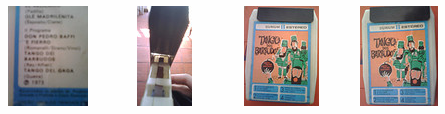
8-track-small


The first one is about Stereo 8. What's in the picture is - for those that don't know - a Stereo 8 cartridge. Before the massification of the Cassette Tape, this was what people used to listen as a more portable (yet inferior) media for recorded music. After the event of massification of the use of cassettes, Stereo 8 lost most of their fans, with exceptions of truck drivers (most of their vehicles came with an 8-track player) and in some less developed countries. This one is mine, one of the two only 8-track I have that still play. The curious fact about it is that, for me, this is the best Tango album I ever listened to. In fact, I generally don't like Tango, but I really dig this album, and during vacations spent quite a few hours listening to it while playing Scrabble with Paula. Unlike the other 8-track cartridge I own, this one was never released in any other format. That means that if I want to listen to it, I must do it from the original source (well, maybe next time I go to Lamego I'll try to rip it to another format). This music is virtually lost: not only I don't believe there are that many 8-track listeners out there, but the probability they have this one, and still playable, is pretty much none. The format is so dead, that each time I tell somebody that the last 8-track released I know of was in 2004 (even if I suspect that if I dig enough I'll find that some crazy band released one more recently), their reaction is generally disbelief: they expected it was in the eighties. So, what happens if you want this music? Nothing. You simply can't have it. Of course it would done absolutely no harm if I made a copy and give it to you, but that would be illegal, this isn't in Public Domain. And since it only enters in Public Domain 70 years after its authors die, we both will be dead or deaf by then... you'll just have to believe this is good music. I don't really think that 70 years after-death for getting music into Public Domain makes any sense, but unfortunately EU is thinking in extending it even more...

The other one is about one music store in Lamego: Brincodisco. I had a quite long and interesting chat with its owner (that was already owner of that place even before I was born, my brother and older sister used to buy there their records...), and there were lots of things in that chat and my visit to the store that made me think in several things - so I'll probably end up talking about that store several times in the future. But, for now, the thing that made me enter into the store the most (well, besides being a music store and me being on vacations): there were several cassette tapes exposed there. But the shock was when I entered: my estimation is that the store sells (more or less) 40% CDs, 35% Vinyl records and 25% cassette tapes. That's right: one quarter of the items selling there are cassette tapes. How do you take this piece of information, when the trend nowadays is saying that all the physical formats are dead but CD, that is dying?

Reality check, please: physical formats are never going to die, and CDs and Vinyls have decades in front of them, before they disappear. You might not like this, you might want to ignore this when you make your business, prediction or whatever you do, but if confronted with this, you need to realize that, even if a niche, the physical music market is here to stay. And I'm glad.

February 20, 2008

Leave a Tip

tipping music

From now on, this blog, Merankorii's website and Noori Records' one have a widget telling you to "Leave a Tip". Basicly, you can give whatever you want, from 1 cent to... well, as much as you like :-) All the money I get there will be used to fund both Merankorii (my musical project) and Noori Records (a record label that does things right).

I've talked a lot about new ways of making music 2.0. Lot's of theorists seem to think that "tipping" is the way to be. While I don't agree that that's the sollution, I think that it surely helps (I'll probably get back to this later). Also, studies on this matter tells that people like the fact that they can choose to support the artists. Since both Merankorii and Noori Records gives a lot of music for free anyway, those who don't wish to buy the the physical product itself, now have a way to tell us "thank your for your work", or just help us to keep doing it. Also, there's a great think about being a DIY band and label: all the figures are low. Leaving 2€ in that tip box will probably make to us more than buying 20 CD's of your favourite musician in a retail store.

So, there you go. If you like the work I've been doing in this blog, the way Merankorii gives music for free or want to support this new record label, consider leaving a tip. Thank you.


If you leave a tip here, it will be used to support Merankorii and Noori Records. Thanks!


January 03, 2008

European Commission adopts strategy for "Creative Content Online"

So, the European Commission decided to "adopt a strategy" for "Creative Content Online". Scary, huh? It is more when you read the press release [1]:

I'll quote some just to give you a glimpse:
The Commission therefore seeks to establish a framework for DRM transparency concerning, amongst others, the interoperability of different DRMs, and ensuring that consumers are properly informed of any usage restrictions placed on downloaded content, as well as of the interoperability of related online services.

All stakeholders are invited to take position on the elements listed in the Annex to the Communication by 29/02/2008... Let's see who's going to answer that call.

[1] - http://smallr.net/creative-content-eu

January 02, 2008

Music: what was 2007, what to have in 2008

Acording to http://hypebot.typepad.com/hypebot/2008/01/top-music-20-st.html, music sales in 2007 are expected to have dropped 15% or more in 2007 (relating to 2006). On the other hand, eMarketer's predictiongs for 2008 also talk about music, as we can see at http://www.mediafuturist.com/2008/01/emarketers-pred.html. The predictions include a further fade off of the CD but a rise of experimentations with new and emerging business models like ad-supported music, mobile music and music social networks. Also, DRM is going to drop further (in music, remember)...

I can hardly wait, let's make 2008!

December 03, 2007

The State of Music Business

Manuel Marino, who has a blog about music in its various aspects, invited me to wrote an article about the state of music business. For those who read this blog for a long time, you probably already know my position about it. But if you're not a reader for that long, or, in other hand, you want to have my thoughts about the state of the music business compiled in a somewhat small article that sums it up, then you might be interested in reading this article:
http://manuelmarino.com/the-state-of-music-business/

November 28, 2007

The music market is falling: who's to blame?


It's known for regular readers that I don't believe that illegal file-sharing has an noteworthy impact in the rise or fall of music market profits: it's more an excuse than anything else. This article tries to find out what's causing this fall.

Even if I read some stuff about market dynamics over the years, I'm surely no expert on the matter. Also, this all issue is way to chaotic to find simple and obvious causes for this fall. So, I decided instead to point four points that surely have some major impact on music market. This doesn't mean that these are the most important issues - they probably aren't, but at least they are some real measurable causes.

The digital era


The music market never made an effort to understand the digital era. The most flagrant example of this is the well-worn Napster case. Yes, people were doing downloads of copyright material, and yes, the copyright owners weren't getting nothing from it. That's beyond the point. The point is that the music industry instead of trying to understand what was happening, decided to just sue them and shut it down. With that act, they also gave a statement: they don't care about the digital era, if it hurts them they'll fight to take it down. The problem here is that you can't take down the digital era, because that's no company, no infrastructure nor even a technology: the digital era is a mind set. People share files because they feel there's no wrong with it. Some people download digital music for free arguing that the real cost of a digital file is zero. It's this kind of social mind set that makes the digital era define the music market's future, and if the music industry keeps against it, or at least doesn't bother trying to comprehend it, then they're fighting against the future of the market they are, thus fighting themselves. Of course that some people got it, and used the digital era to make profit: Apple, for instance, created the iPod and iTunes, making huge profits in an empty market. But the profits are not only for retailers: I've seen musicians, labels and every other piece of chain in the music business benefit from the digital era, they just decided to understand it first. The best Portuguese music I got in 2007 came from a Portuguese label created this year, some other music labels I know are in frank expansion, some music stores too. We've seen new business models rising, from fans-funded recordings like what you can find on SellABand, or even bands making money by giving their music for free in sites like ReverbNation.

The purchasing power


There are also less music related issues that have an huge impact in the music business, and ignoring them is like forcing ourselves not to see the elephant in the room. One of them is the actual purchasing power for these kinds of goods in the so-called developed countries. I've done several parallels in the past: for instance in the 2006 Portuguese BarCamp I compared the music business with the coffee machines business. The fact is that businesses - each one of them - have to adapt to the overall market. If people start to consider some stuff as "luxury items", then maybe those items should be sold as such. If
people start thinking that some item is more valuable than other item - in a case where typically they'll choose upon one of the two - then the second one has naturally to be less expensive than the first one. Market laws apply to any market, but the music industry fails to understand that the music market follows the same rules than any other market.

The physical price


So, the digital era appeared and with it digital music, that feels like free. On the other hand, the purchasing power for the class of goods music is inserted in is being reduced in the last few years. The natural thing to have would be the price of CD's, more than any other physical format for music sales, to follow these two indicators and have their price falling. Plus, even if that wasn't case, people were already expecting the CD price to fall anyway: one of the things that were being said in the first times of the Compact Disc is that the high price they cost would soon fall with new technology arriving, and the consumers kept that in mind. The manufacturing cost sure fell, as we managed to see, for instance, in the price of blank CD-R's. Yet, the price of a music CD kept rising. Doing the math, what's expect to happen to music sales other then a fall?

How to measure quality?


One of the causes, at least in Europe and in the United States for the rise of the physical price is the way big retailers entered in the music market. Big stores had everything in one place, wanting to be your one-stop-choice. They managed (by quantity and scale) to practice such lower prices that they practically killed an huge amount of small music stores, or forced them to practice even bigger prices to deal with the dropping unit sales. When they were already controlling some markets like the music market, they were then free to practice the prices of their choice. Speaking of choice...

It would be stupid trying to measure music quality. But we measure related factors, like choice and diversity. Let me explain: if music quality is hard to define because each person have different musical tastes, then it's pretty obvious that if you have few choice and diversity, then few people would be interested in the music being released and available to the public, and fewer articles for their tastes. To aggravate this, if market diversity isn't accomplished than if you satisfy someone's tastes, that person only has the choice to buy way-too-similar music (which will lead him to buy less music) or not to buy it at all.

With the fall of investment on music from the music industry, and with the fact that the market reaches its physical public mainly via big retailers, came the standardisation of music. Only a few pre-determined music styles, known to be well consumed, have place in the market. The long tail of music was being completely ignored (and majorly found their place on a less controlled environment like the Internet, embracing the digital era).

I risk to assume that if we consider the overall quality of the music available on music stores dependent of their diversity, by attracting each listener segment, then the overall quality of music has decreased in the last few years, which can then be related with the decrease of music sales.

Conclusion


If you still want to say that file-sharing is guilty of the decrease of music sales and overall profit on the music market, go ahead, I won't stop you, even if I don't buy it. But considering all the other factors that might affect its market, including those that surely are, please avoid making the same mistakes as Liebowitz is going to state in his upcoming paper, where he not only states that piracy is guilty of the decreasing of music sales, but that "file-sharing* appears to have caused the entire decline in the record sales and appears to have vitiated what otherwise would have been growth in the industry".

* - funilly, he measures "file-sharing" by measuring Internet penetration

November 26, 2007

Copyright news links

http://blog.marques.cx/2007/11/25/digital-russian-rights-management/
ZML is the "AllOfMp3 of music". I wonder how long will it take to have MPAA threatning Russia (again)...

http://smallr.net/label-that-get-it
Suburban Home anounces “I Celebrate Their Entire Catalog” digital sampler, proving that there are music labels that "get it". They encourage you to download the entire sampler and share it with everyone.

http://smallr.net/distributor-gets-it
...and a music distributor that also gets it. Basicly: stop whining and act!

http://smallr.net/who-cares
Yeah, Facebook is evil, but who cares? Seems that Techcrunch readers care, but that's surely not a representative slice of Facebook users...

http://www.daniweb.com/blogs/entry1845.html
French polititians are doing drugs. No, really!

http://smallr.net/europe-oss
Europe the leader, not the follower in open source

http://smallr.net/swpat
Finaly, someone getting nailed for trying to use that software patents to get money. Why not working instead of bullying?

http://smallr.net/music-industry
A nice and actual music idustry overview. Where are we heading to?

http://smallr.net/korea-music
The Asian market is quite ahead of us, specially in the music industry. This article is nice to see that, but what I liked the most was to see that in Korea this year they'll reach 4x more sales of cellphones that are also music players than music players that aren't cellphones...

November 13, 2007

Being a musician in Portugal

broken recordSwapping e-mails with Cory Doctorow about copyright. Reading new stuff about music 2.0, specially about blanket licenses. Discussing about new music business models and piracy in mailing lists. Doing some consultancy to social music networks. All of this leads me to discussions about how to do things better, and sometimes it makes me forget about the problems Portuguese people have nowadays even for the "music 1.0" era. So, this post is about the biggest problem I find about being a musician in Portugal. Note that this is not only of interest for Portuguese people, since many other countries are in a simmilar (or even worse) state.

The Portuguese law [1] is quite clear about the rights of copyright owners (translation is mine and sucks, sorry):
Are considered works the intelectual creations from the literary, cientific or artistic domain, exteriorized in any way, that, as such, are protected in the terms of this Code, including in that protection the rights of their authors.

Great, so now we know that any music created is covered by this law, as well as its author. Moving along...
For the purposes of this Code, the work is independent of its divulgation, publication, usage or exploitation.

So, if you make a song, you're covered, even if you didn't publish it or done anything with it.
The protection of the work is extensible to its title, independently from the registry, regarding that it cannot be confused with a title of any other work from the same type of another author, previously exteriorized or published.

So, not only the work but also its title is protected just by being created and named, even if it is not registred.
The published work is the work reproducted with its author's consent, whichever is the way the units are made, providing that they are disposed to the public.

So, when you do a track and, for instance, put it on the web to download or stream, you're publishing it.
The author rights are recognized independently of its registry, deposit or any other formality.

Yup, you're the author so you should do anything you want with it, without any obligation.

So... The law is preety cool in this aspects right? So here's the problem: the music industry acts like the Mafia, and in Portugal it's obvious. You know what mafia does: it "convinces" you that you need their (payed) protection, when, in fact, you're being protected... from them. So, the Portuguese entities that supposedly "protect authors' rights" - where you register your work - act in the same way. Want to have an example?

If you are the author of your own work and you want to pay to a Portuguese company to print some Audio CD's (not CD-R's), every of those companies ask you the same thing: you need to register your work to be our client.

So... isn't this acting criminously? What "protection" are these companies giving authors? Isn't this a block for creativity? So, if you think that Portugal is ready for a blanket license, or that the discussion is about piracy or stuff like that... Think twice. We have a structural problem here, and lot's of things worth fighting for.


[1] - http://tinyurl.com/yvf9na

image from http://www.flickr.com/photos/williamkunz/196894022/, covered by a Creative Commons license

My trip to Berlin in 10 little items

berlin semaphores

  1. Berlin first impressions: it's great to be a walker there;
  2. 15 Portuguese people on Web 2.0 Expo Berlin, that I know of;
  3. Berlin's public transports are great, but it's somewhat hard to get used to them;
  4. The idea that Portuguese hospitals are a lot worse than other European countries isn't quite true: they are worse but not that much;
  5. You have to love Berlin's traffic lights;
  6. German people have something against double beds, maybe it's something that comes from Jewish traditions?
  7. I hoped that music there was cheaper, but that's not quite true: average price at 17.50 €. On the other hand, every store is better than any music Portuguese music store I know of regarding stock quality. Plus, they have quite a lot more percentage of stuff in vinyl;
  8. Movies and Books, specially books, are obscenely cheap there, comparing to Portugal. And their bookshops' are awsome. And it seems that adiobooks is the next big thing there...
  9. If you're to go there, remember: go to the DDR museum and the cinema museum. If to choose one of those, choose the first.
  10. It was great being there, and mind-thrilling too. There's a lot of new stuff gereminating in my mind... You might see the results sometime.